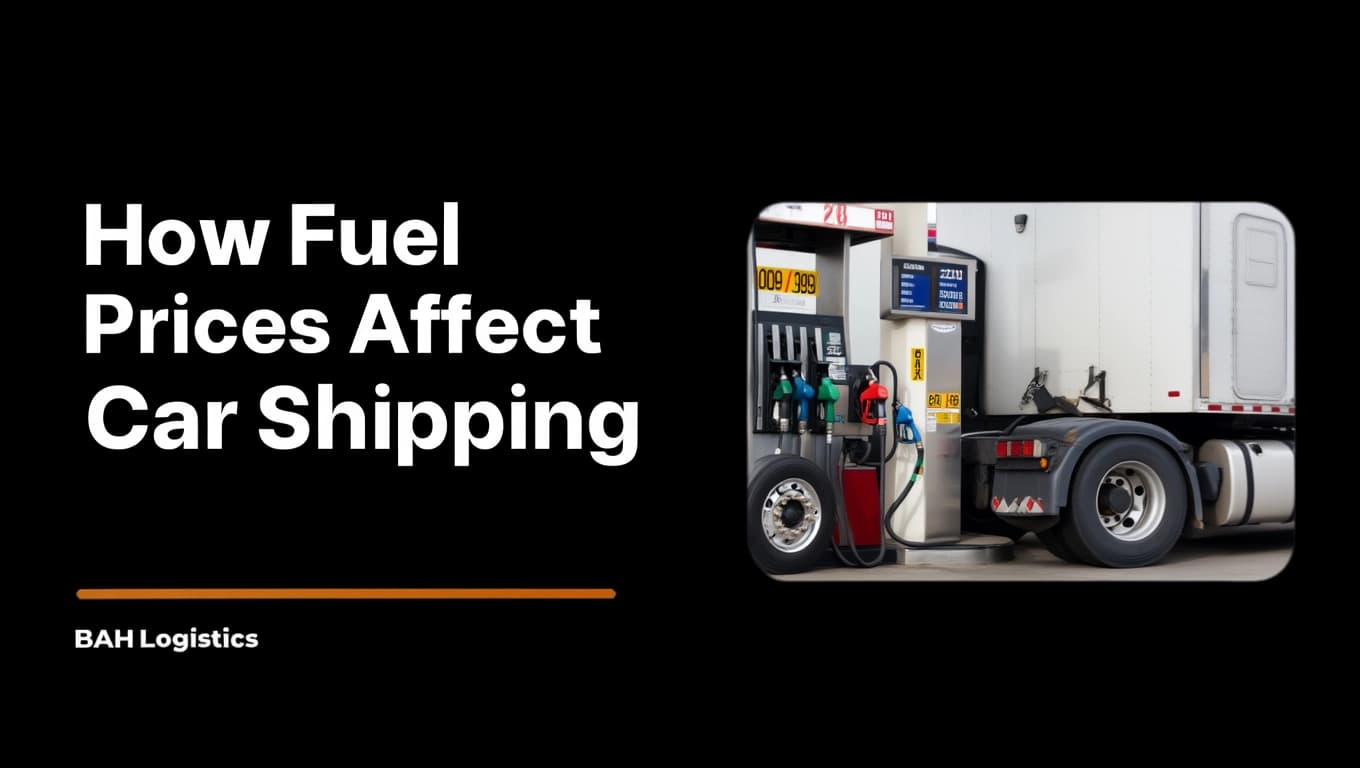

Every time you fill up your tank, those same fuel costs are shaping car shipping prices behind the scenes. Fuel isn't just an expense; it's the biggest variable in auto transport rates. As of March 2026, U.S. fuel prices are under upward pressure, with both gasoline and diesel trending toward levels not seen since mid-2022. Even small increases can impact carrier operating costs, especially on long-distance routes.
So if you've ever wondered why your quote suddenly changed, the fuel price is usually the answer. At BAH Logistics, our experts track fuel markets and carrier rate shifts constantly. Keep reading to find out how fuel drives shipping prices, what to expect in the months ahead, and how to ship your vehicle smartly, no matter where prices go.
Why Fuel Prices Are So Important in Car Shipping
Car haulers are not ordinary trucks. A fully loaded open carrier can weigh close to 80,000 pounds, and at that weight, a typical rig gets around 5 to 6 miles per gallon on the highway. On a coast-to-coast route spanning 2,500 to 3,000 miles, that adds up to 400 to 600 gallons of diesel for a single trip. That cost does not disappear. It is built directly into every quote on every route.
What makes fuel different from every other carrier expense is that it cannot be negotiated, planned around, or absorbed long-term. A carrier can lock in better insurance rates, optimize driver schedules, and reduce maintenance costs through smarter fleet management. Diesel at the pump tomorrow is completely outside their control. It is the one variable in auto transport pricing that moves independently of anything a carrier or broker does, which is why it has an outsized effect on what you pay.
| Factor | Detail |
|---|---|
| Typical MPG for a Loaded Carrier | 5 to 6 MPG on highway routes |
| Fuel Share of Carrier Operating Costs | Up to 30% on long-haul routes |
| Diesel Consumed on a Coast-to-Coast Trip | 400 to 600 gallons per carrier load |
| Customer-Facing Impact of a $1 per Gallon Diesel Rise | Approximately $75 to $150 per vehicle shipped |
Why Diesel Prices Are So Volatile: The Chain That Connects Oil Markets to Your Quote
Most customers requesting a car shipping quote are not thinking about crude oil. But the price in front of them was shaped by energy markets before a single carrier was contacted. Understanding that chain explains why auto transport prices can shift in days and why two quotes issued a week apart on the same route can look different.
| Where It Starts | What Actually Happens | Why It's Unstable |
|---|---|---|
| Global Crude Oil Markets | Crude oil is priced internationally and fluctuates daily based on OPEC output decisions, geopolitical events, and global demand shifts. | No single company or government controls it. |
| U.S. Refineries | Crude is processed into diesel fuel; refinery capacity, maintenance cycles, and regional supply constraints add cost at this stage. | Refinery outages or seasonal switches in fuel blends can spike prices independently of crude. |
| Diesel at the Pump | Carriers and trucking fleets fill up daily at commercial fuel stations, paying whatever the current market rate is. | Carriers cannot hedge or prepay fuel the way airlines can with jet fuel contracts. |
| Carrier Rate Adjustments | When diesel crosses certain thresholds, carriers adjust base rates or add surcharges to protect their margins. | Adjustments can happen weekly, sometimes faster during sharp price moves. |
| Your Shipping Quote | By the time a quote reaches you, fuel costs are already factored in, either as a visible surcharge or rolled into the base rate. | If diesel moves significantly between your quote date and dispatch, the rate may move with it. |
How Fuel Prices Affect Your Quote
A car shipping quote is not a single number. It is a base rate plus market conditions, and fuel lives in both. Most customers only notice fuel when it appears as a surcharge. By then, it has already shaped the rest of the price.
The Base Rate
The base rate reflects the core cost of moving your vehicle from origin to destination. Four factors determine it.
Distance is the most obvious input. Longer routes require more carrier time, more driver hours, and more diesel. Route popularity shapes pricing in ways most customers do not expect. Heavily traveled corridors have more carriers competing for loads, which keeps rates more competitive. Less common routes have fewer carriers willing to run them, and that scarcity is priced in from the start. Vehicle size affects how much trailer space your car occupies. An oversized truck or lifted SUV displaces other vehicles on the road, which raises the fuel cost per shipment. Seasonality creates predictable demand cycles that carriers price for in advance, not just react to.
Where Fuel Fits In
Fuel enters your quote in one of 2 ways.
1. The first is a visible fuel surcharge, listed as a separate line item. Most carriers tie this to the national diesel average published weekly by the U.S. Energy Information Administration. When diesel crosses a defined threshold, the surcharge activates. When prices fall, it shrinks or disappears.
2. The second is a rolled-in rate, where fuel is absorbed into the base rate with no separate line item. Some companies market this as "no fuel surcharge" pricing. In practice, it means the fuel cost is less visible, not lower.
What This Means When Comparing Quotes
A lower base rate with a visible surcharge may cost the same as a higher base rate with no surcharge listed. The only way to compare them accurately is to ask one direct question: what is the total all-in price at current diesel rates, and can that change before dispatch?
At BAH Logistics, fuel costs are always reflected in your quoted price at current market rates. The number you see accounts for what diesel actually costs the day your quote is issued.
Why Your Quote Might Change After Booking
Receiving a quote and booking a shipment feel like the same moment. In auto transport, they are not, and that gap is where most customer frustration originates.
Booking and Dispatch Are 2 Separate Events
When you book a car shipment, a carrier has not yet accepted your load. Your vehicle enters a dispatch queue where it is matched to a carrier running your route at the right time. That matching process typically takes two to five days on standard routes and longer on rural or low-demand corridors. The rate you were quoted reflects market conditions at the moment the quote was issued. The rate a carrier accepts at dispatch reflects market conditions at that moment, which may be different.
This is not a loophole or a bait-and-switch. It is the structural reality of how auto transport operates, and every legitimate company in the industry works within the same system. The difference between companies is how honestly they explain it upfront.
3 Things That Can Shift Your Rate in That Window
1. Diesel prices are updated weekly by the U.S. Energy Information Administration, and carriers adjust their surcharge structures accordingly. A fuel spike between your booking date and dispatch date can move rates before a carrier ever contacts you.
2. Route demand can change within days. A surge in seasonal traffic, a regional weather event rerouting shipments, or a drop in available carriers on your specific corridor can all tighten capacity quickly. When fewer carriers are available for the same number of loads, rates adjust upward independent of fuel.
3. Carrier acceptance timing adds one more variable. A carrier reviewing your load at dispatch is looking at current market conditions, not the conditions from the day you booked. If the economics have shifted, they will price accordingly before accepting.
How We React When Rates Move
If a carrier adjustment is needed before dispatch, you will hear from us directly before anything is confirmed. You will receive a clear explanation of what changed and why, the updated rate, and your options. You can accept the adjustment, request time to evaluate, or cancel without penalty. Nothing moves forward without your decision.
How to Protect Yourself From Fuel-Driven Price Changes
Understanding why quotes change is useful. Knowing what to do about it is better. Most of the risk in auto transport pricing is not unavoidable; it is just poorly timed. These are the decisions that give you the most control over what you pay.
Book 2 to 3 Weeks Ahead
The booking-to-dispatch window is where most rate changes happen. The further ahead you book, the more stable the market conditions are likely to be between your quote date and your pickup date. Last-minute bookings compress that window, but they do not eliminate the risk. They simply leave you with less flexibility to respond if conditions shift. Booking two to three weeks out on standard routes gives you the best chance of holding the rate you were quoted through to dispatch.
Understand What Your Quote Actually Covers
This is the most overlooked protective step in the entire process. Before accepting any quote, ask two direct questions: is this an all-in price or a base rate with surcharges added at dispatch, and can this rate change between now and when my vehicle is picked up? The answers tell you everything about how much pricing certainty you actually have. A lower-looking base rate with a separately applied surcharge may end up costing more than a higher all-in quote, particularly if diesel moves in the window between booking and dispatch.
Be Flexible With Your Pickup Window
A narrow pickup window forces carriers to prioritize your load regardless of whether their trailer is full. A carrier departing with six vehicles instead of ten spreads fuel costs across fewer shipments, and your vehicle absorbs a larger share of that operating cost. Giving a carrier a five to seven-day pickup window allows them to build a fuller load, which reduces the per-vehicle fuel cost and often produces a more competitive rate without any negotiation required.
Ship on High-Traffic Routes Where Possible
Carrier competition is highest on the corridors that move the most vehicles. Routes like Los Angeles to Chicago, New York to Florida, or Texas to California have enough carrier volume that fuel cost increases are absorbed more gradually and competitively than on low-demand corridors. If your origin or destination gives you any flexibility, even adjusting pickup or delivery to a nearby major metro rather than a rural address, it can meaningfully reduce both your base rate and your fuel exposure.
Choose Open Transport Unless Your Vehicle Requires Enclosed
Open carriers transport 8 to 10 vehicles per load compared to two to six on enclosed trailers. More vehicles sharing each gallon of diesel means fuel price movements have a smaller per-vehicle impact. For standard vehicles, open transport is not just the more affordable option. It is structurally the more fuel-stable one. Enclosed transport remains the right choice for luxury, classic, and high-value vehicles where protection justifies the premium, but the fuel sensitivity tradeoff is worth understanding before you decide.
Work With a Company That Explains the Market, Not Just the Price
A quote is a snapshot of market conditions at a single moment. A company that gives you a number without explaining what drives it, what could change it, and what your options are if it does is leaving you exposed to surprises they could have prevented.
At BAH Logistics, we work with a national network of vetted carriers across every major corridor in the country. That network gives us real-time visibility into route demand, carrier availability, and diesel price movements that a smaller or less connected broker simply does not have. When you request a quote from us, you are not getting a number pulled from a rate calculator. You are getting a price built on what the market actually looks like that day.
Before your vehicle moves anywhere, you will know exactly what your quote covers, whether conditions have shifted since booking, and what your options are if they have. The right question to ask any auto transport company is not just what the price is, but what happens to that price between now and the day your car is picked up. At BAH Logistics, that question always gets a straight answer.
Current Fuel Price Trends (2026)
According to the U.S. Energy Information Administration, diesel averages over $4.00 per gallon nationally — and for carriers running coast-to-coast shipments, even gradual increases add up quickly across hundreds of miles and dozens of vehicles each week.
| Fuel Type | Trend (Early 2026) | Impact on Car Shipping |
|---|---|---|
| Diesel | Rising | Direct — powers every car carrier on the road |
| Gasoline | Rising | Indirect — reflects broader energy market pressure |
| Crude Oil | Volatile | Root cause — drives both diesel and gasoline prices |
Several factors are driving this upward pressure:
Global supply uncertainty — crude availability remains limited.
Seasonal demand — spring and summer increase fuel consumption nationwide.
Refinery constraints — domestic supply can’t always meet demand spikes.
Currency and trade shifts — changes in the U.S. dollar and trade conditions affect imported energy costs.
How BAH Logistics Handles Price Fluctuations
Most auto transport companies respond to fuel volatility after it affects your shipment. At BAH Logistics, we track it before it does.
We Monitor the Market Every Week
Every week, our team reviews the EIA national diesel average, carrier rate movements across every major corridor we serve, and capacity shifts that signal price changes before they appear in published rates. That process is what allows us to quote you accurately at current market conditions rather than averages from the previous billing cycle that no longer reflect what carriers are actually paying at the pump.
No Surprises After Booking
If carrier conditions shift between your booking date and dispatch, you will hear from us directly before anything is confirmed. We explain what changed, why it changed, and give you three options: accept the updated rate, request time to evaluate, or cancel without penalty. Nothing moves forward without your decision.
Fuel Price Prediction: What To Expect in 2026
Predicting fuel prices with certainty is not possible. What is possible is understanding the directional forces at work and planning your shipment around them.
The Pressures Pushing Prices Up
Seasonal demand is the most predictable near-term factor. Diesel consumption rises every year between April and August as freight activity and construction accelerate simultaneously. For anyone shipping between May and September, current prices are likely closer to the floor of that window than the ceiling.
Geopolitical uncertainty remains unresolved heading into mid-2026. Supply disruptions in crude markets typically take four to eight weeks to translate into U.S. diesel prices, which means volatility today shows up in your shipping quote within two months.
Refinery capacity is a structural problem rather than a temporary one. Any demand surge that outpaces current output creates price spikes that resolve slowly.
The Factors That Could Bring Relief
Increased domestic crude production could ease pressure if output expands meaningfully over the next two to three quarters. Current projections suggest modest gains but nothing that shifts the national average before fall.
Seasonal easing in late September and October historically pulls prices down from summer peaks. If your timeline has any flexibility, the October to early December window tends to offer the most stable fuel conditions and most competitive carrier rates of the year.




