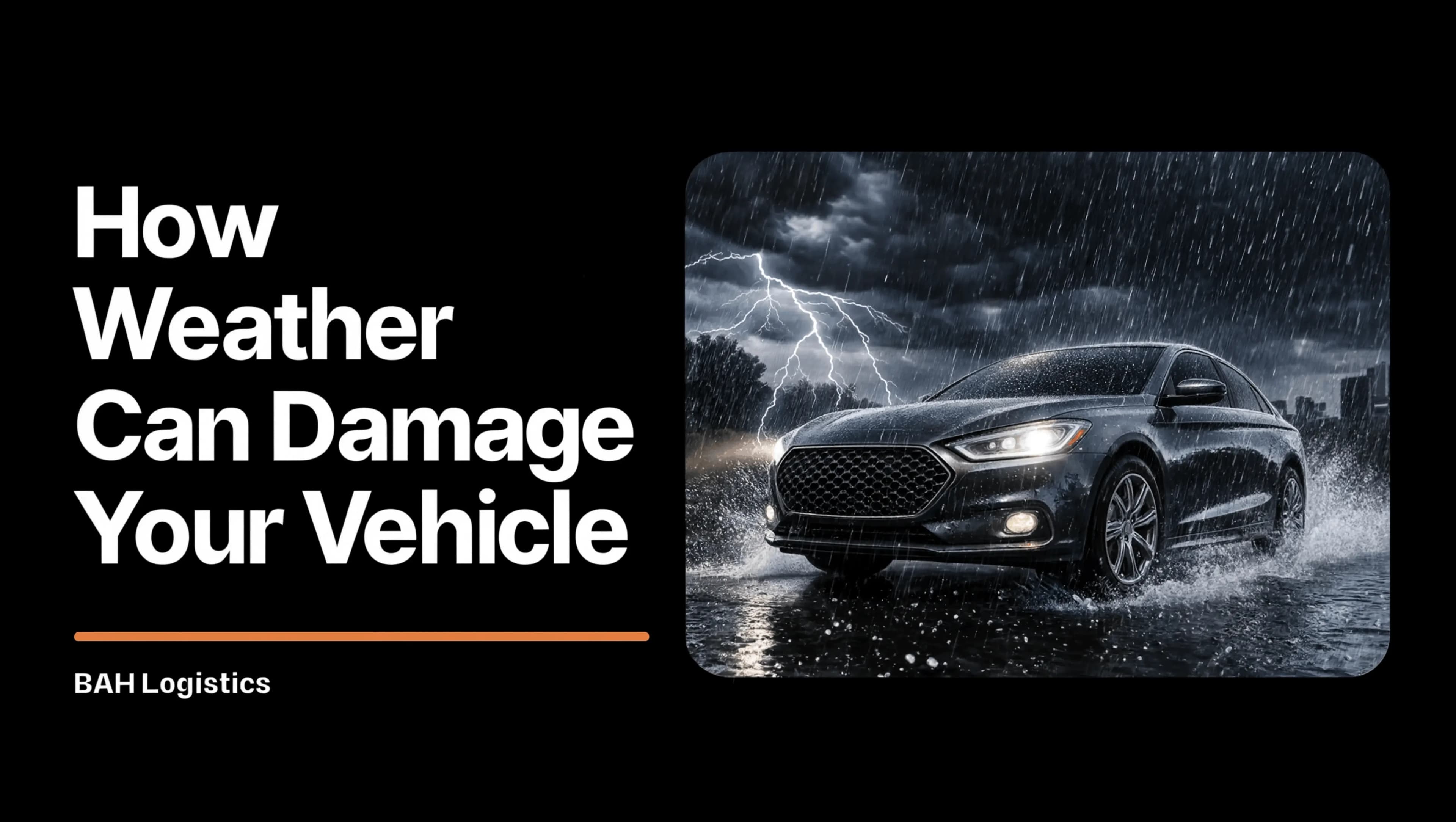

Understanding how the weather can damage your vehicle is important for anyone relying on delivery across the USA. Weather conditions significantly impact the vehicle shipping industry, affecting transit times and vehicle conditions upon arrival. From heavy storms to extreme temperatures, various weather phenomena can cause scratches, dents, rust, and other damage during transport.
Whether you're a car dealership moving inventory, a snowbird relocating seasonally, or an individual shipping a classic or luxury car, considering and realizing weather-related risks is important for safe, reliable transport. In this guide, we'll break down the most common challenges and share the best ways to protect your vehicle throughout its journey.
Why Weather Is One of the Biggest Threats to Your Car
Vehicles are vulnerable to weather because their components, such as paint, tires, and electrical systems, are susceptible to temperature extremes, moisture, and damage from road debris.
For example:
UV rays can degrade up to 90% of visible paint, as well as plastics and leather.
Rain can lead to rust, electrical problems, and reduced visibility.
Winter conditions, including snow and ice, can damage tires and brakes.
Extreme heat can cause battery and tire issues.
Protecting your vehicle from harsh weather is key to keeping it safe and reliable on the road.
How Different Weather Conditions Damage Vehicles
The United States experiences diverse weather patterns, from hot, humid climates in Florida and the Gulf Coast to cold, snowy winters in the Midwest and Northeast. These conditions can significantly damage your vehicle during transport. Here's how specific weather types impact your car's condition:
Sun & Heat
Arizona and Florida experience some of the strongest sunlight in the country, while states like Florida, Louisiana, and Texas are among the hottest overall. The sun affects vehicles through both UV radiation and high temperatures, causing damage to exterior and interior components alike.
UV rays degrade paint, leading to fading and loss of gloss, while excessive heat can cause dashboards, seats, and steering wheels to crack or become brittle. In electric vehicles, extreme heat can also accelerate battery degradation.
Preventive Measures:
Whenever possible, park in shaded or covered areas, especially during peak heat. Use protective coatings, such as wax or ceramic sealants, to reduce UV damage, and consider enclosed transport for your vehicle, particularly in sun-intense states or during the summer season.
Rain & Humidity
Hawaii, Louisiana, Mississippi, and Alabama are among the rainiest states due to their tropical and humid subtropical climates, while Alaska, Louisiana, Mississippi, and Florida have the highest average humidity levels.
Both rain and humidity can significantly affect vehicle performance and longevity. High humidity causes condensation that can interfere with sensors, leading to short circuits, corrosion, and inaccurate readings. Heavy rainfall increases braking distance, corrodes paint and metal, and can even cause engine damage if water enters the intake system.
Over time, moisture can also seep into the cabin, damaging interior materials such as leather, fabric, and electronics.
Preventive Measures:
Keep your vehicle protected from rain and humidity by regularly cleaning the undercarriage to remove moisture and prevent rust. Apply protective coatings, such as ceramic or undercoating, to safeguard exposed metal. For added protection during transport, consider using enclosed shipping to prevent water from entering the vehicle.
Snow, Ice & Road Salt
Northern U.S. states, including New England (Maine, Vermont, New Hampshire), experience heavy snow and frequent use of road salt.
Snow and road salt can cause corrosion and scratches on the vehicle’s exterior. Tires and wipers may crack, tire pressure can drop, and internal components may be damaged by freezing temperatures, reducing battery efficiency.
Preventive Measures:
Use a car cover to prevent snow accumulation and a windshield cover to avoid ice buildup. Apply protective coatings to help guard against corrosion, and consider enclosed transport to keep your vehicle safe from snow, ice, and salt during shipping.
Hail, Wind & Storm Debris
Hail, wind, and storm debris are most common in states across the Midwest and Southern U.S., including Texas, Oklahoma, Kansas, Nebraska, and Florida.
Hail can damage vehicles by causing cosmetic issues like dents, paint chipping, and cracked glass, and may also lead to more serious problems over time, such as damaged roof structures or broken exterior components like mirrors and lights.
Wind and storms can cause additional physical damage, including dents, scratches, and broken windows from flying debris.
Preventive Measures:
The best protection is to park in a garage or carport during severe weather. If indoor parking isn’t available, use a specialized hail-resistant car cover with thick padding to absorb impact. For vehicle transport during storm-prone seasons, enclosed car transport offers complete protection.
Dust, Sand & Coastal Air
Dust, sand, and coastal air can occur anywhere in the United States, but are most prevalent in states with deserts or extensive coastlines, including Arizona, Nevada, California, Texas, and Florida.
These conditions don't just affect a vehicle's appearance—over time, they can reduce its value, safety, and performance. Dust and sand can scratch paint and glass, clog air and cabin filters, and cause rust and corrosion, especially in coastal environments.
Preventive Measures:
Apply a protective coating such as wax, sealant, or ceramic coating. Whenever possible, park in covered areas or use a car cover. For transport, choose enclosed car shipping, which provides the best protection against dust, sand, and salty air.
Extreme Cold & Heat on Car Systems
Extreme cold and heat can have significant effects on a vehicle’s performance, safety, and longevity.
In cold conditions, batteries can drain faster, engine oil can thicken, and hoses and belts may become brittle, increasing the risk of leaks or failure.
Heat can cause coolant to evaporate, leading to overheating, and can also create fluctuations in tire pressure.
For electric vehicles, extreme temperatures can reduce battery range and efficiency, potentially limiting driving distance.
Preventive Measures:
Park vehicles in a garage or shaded area to avoid direct exposure to temperature extremes. Regularly check battery health, fluid levels, and tire pressure to ensure optimal performance. For transport, opt for enclosed shipping, which provides the best protection against both extreme cold and heat.
How to Protect Your Vehicle from Weather Damage
To protect your vehicle, consider taking the following precautions: regular maintenance and inspections help identify weather-related wear before it becomes serious. Additionally, using protective coatings and enclosed transport options can greatly reduce the risk of damage from harsh elements.
Smart Parking Strategies
The simplest way to protect your vehicle is by choosing where and how you park. Garage parking provides the best all-weather protection, shielding your car from sun, hail, rain, and temperature extremes. If a garage isn’t available, invest in a high-quality, breathable car cover that’s custom-fitted to your vehicle. It prevents moisture buildup while protecting against UV rays, dirt, and debris.
Location matters too. Avoid parking under trees or power lines, where falling branches or debris can cause damage during storms. If a severe storm is approaching, position your vehicle facing the wind rather than sideways to reduce the impact of debris.
Essential Maintenance
Regular maintenance is your defense against weather-related damage. Wash your car frequently to remove corrosive salt, sand, and grime, then apply wax or ceramic sealant to create a protective barrier against the elements.
Keep your fluids in check, as proper coolant and oil levels are important for engine performance in extreme temperatures. Have your battery tested regularly, especially before winter, as cold weather can significantly reduce battery capacity. Monitor tire pressure weekly, since temperature fluctuations cause it to drop, and consider winter tires if you live in areas with snow and ice.
Protective Accessories
Small investments in the right accessories provide long-term protection. Windshield sunshades prevent interior fading and cracking during hot months, while covers protect against ice, scratches, and storm debris in winter. All-weather floor mats are essential year-round, protecting your interior materials from salt, mud, and moisture that accelerate wear and corrosion.
For Vehicle Transport
Enclosed auto transport shields your car from all weather threats. This controlled environment is especially valuable when crossing multiple climate zones, allowing your vehicle to travel from desert heat to winter storms without exposure to the elements. Rain, hail, dust, salt spray, and flying debris are fully blocked during transit, helping preserve your vehicle’s finish and prevent corrosion. With added features such as air-ride suspension, lift-gate loading, and comprehensive insurance, enclosed transport ensures your vehicle receives the highest level of care.
Weather Damages to Vehicle
Here is a quick-reference chart to see how different weather conditions can affect your vehicle and the best ways to protect it.
| Exposure Type | Risk Level | Protection Method |
|---|---|---|
| Sun / Heat | High | Ceramic coating / Enclosed transport / Park in a shaded area |
| Rain / Humidity | High | Rustproofing / Enclosed transport / Regular undercarriage cleaning |
| Snow / Salt | Extreme | Wash regularly / Protective coatings / Enclosed transport |
| Hail / Wind / Storm Debris | High | Garage / Hail-resistant cover / Enclosed transport |
| Dust / Sand / Coastal Air | Moderate | Protective coating / Car cover / Enclosed transport |
| Extreme Cold & Heat | High | Check battery, fluids, tire pressure / Garage or shaded parking / Enclosed transport |
When Enclosed Car Shipping Is Worth It
Enclosed transport isn’t just for luxury or exotic cars. Many BAH Logistics customers choose it to protect their vehicles from weather, road debris, and other potential hazards. Get a personalized enclosed shipping quote today and enjoy these enclosed transport benefits.
Keeps Water Out and Rust Away
Enclosed trailers act like a rolling garage, completely blocking moisture. This sealed space keeps paint, chrome, and the undercarriage dry no matter the forecast. For long trips through storm-prone states, it’s the most effective way to keep your car clean and corrosion-free.
Stops Heat and UV From Fading Paint
Enclosed shipping keeps your car shaded and cool throughout the journey. Interior temperatures stay stable, protecting finishes, leather, and delicate trim. If you’ve ever felt a steering wheel burn your hands in the sun, you know why this matters.
Guards Against Flying Debris and Road Salt
Inside an enclosed trailer, hazards never get close. This is especially important in winter when road crews spread salt that can cling to vehicles shipped openly.
Works in Any Season, Any State
Winter snow, summer heat, and coastal rain each come with its own risks. Enclosed carriers shield against all of them, allowing year-round shipping with confidence. Rain or shine, your vehicle will arrive covered, clean, and ready to drive.
Peace of Mind with Enclosed Transport, Whatever the Forecast
The weather is unpredictable, but your vehicle’s protection doesn’t have to be. Safeguard your car with enclosed transport from BAH Logistics, where our trailers shield your vehicle from rain, snow, hail, wind, dust, and road debris. Don’t leave your car to chance—get a quote today and ensure safe, worry-free transport, no matter the weather!




