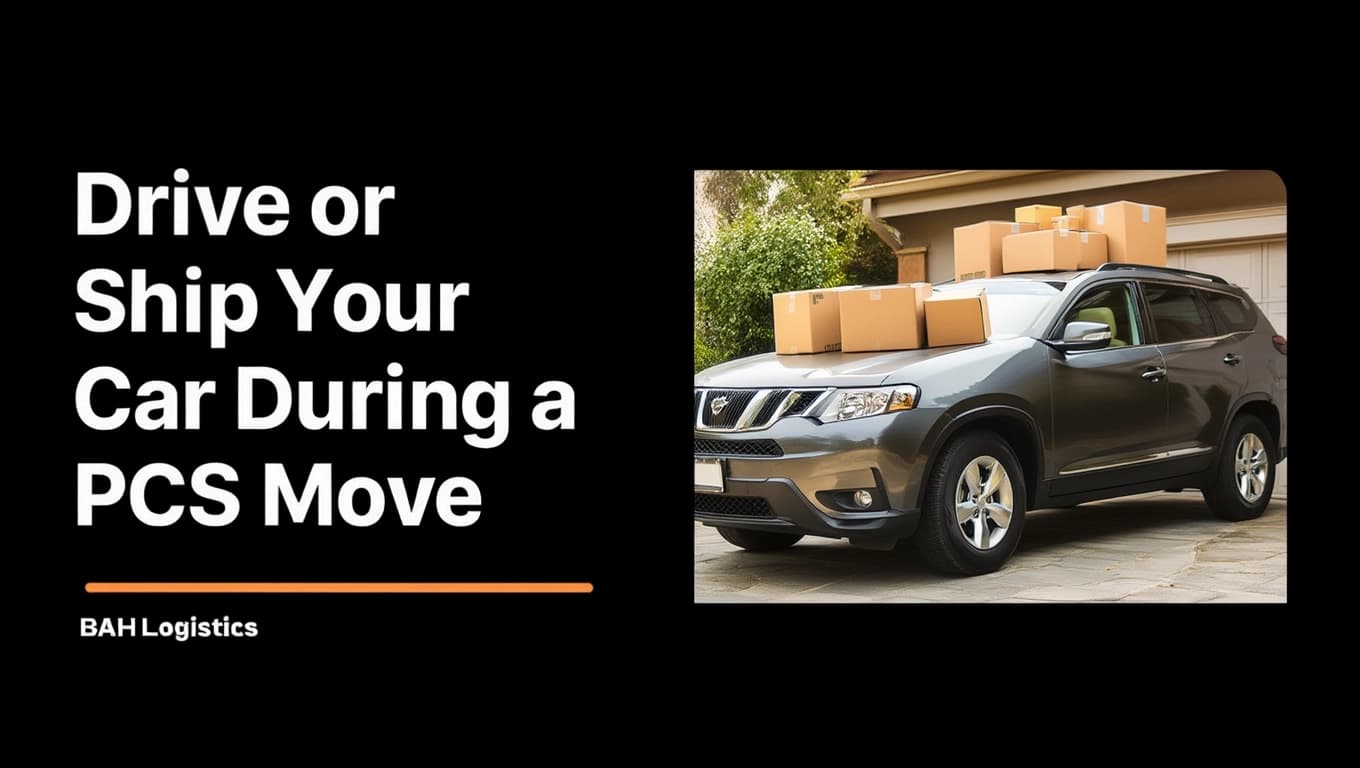

When your PCS orders arrive, you’re faced with an important decision: should you drive your car to your next duty station or hire a professional auto transport service? It’s a question every PCS household faces, and with roughly 400,000 to 450,000 service members relocating each year, you’re far from alone.
Driving may seem like the simpler, cheaper option, but it comes with real costs: time on the road, wear and tear, safety concerns, and lost days during an already hectic transition. Shipping your car has its own tradeoffs, too. This guide breaks down the costs, military shipping timelines, real logistics, and key decision factors so you can decide with confidence and avoid second-guessing it halfway through your move.
The Real Cost of Driving During a PCS Move
Most military families assume driving is the cheaper option. After all, you're not writing a check to a shipping company. But “free” has a way of hiding its price tag, and on a PCS move, the hidden costs stack up fast.
Fuel is the one expense families do plan for. For a 2,000-mile drive in a vehicle getting 25 MPG, you're using about 80 gallons of gas. At current prices, that’s roughly $240 to $400 just to get from point A to point B. Longer distances or lower fuel efficiency will push that number higher.
Hotel stays are the next major cost. A cross-country PCS rarely happens in a single day, especially with kids. Plan for 3–4 nights at $100–$200 per night near major interstates, and you're already at $300 to $600, before meals.
Food on the road adds up quickly. It may not feel like much at the moment, but over several days, a family of four can easily spend $40–$100 per day. That’s another $150 to $350 added to the total.
Wear and tear is where many families underestimate the true cost. Every mile reduces your vehicle’s value, typically estimated at $0.06–$0.14 per mile, plus added strain on tires, brakes, and engine components. You may not see it immediately, but it impacts your vehicle’s long-term reliability and resale value.
Then there’s the wildcard: breakdowns. A flat tire or mechanical issue in the middle of nowhere doesn’t just cost money; it costs time. Towing alone can run $100–$500. Add repairs, an extra hotel night, and potential delays, and a simple trip can quickly turn into a much more expensive and stressful experience.
Car Shipping Cost by Distance
Here’s a practical breakdown for PCS moves:
| Move Type | Estimated Range | Carrier Type | Best For |
|---|---|---|---|
| Local (under 500 mi) | $200 – $600 | Open | Short CONUS moves; driving is often still competitive |
| Cross-country (1,500–3,000 mi) | $800 – $2,000+ | Open | Most PCS relocations are often cheaper and less stressful than driving |
| Cross-country (enclosed) | $1,200 – $3,000+ | Enclosed | Luxury, classic, exotic, or high-value vehicles |
PCS Move Breakdown: When It’s Cheaper to Drive vs Ship Your Car
| Distance | Drive Total | Ship Total | You Save | Winner | Notes |
|---|---|---|---|---|---|
| 500 mi | $210 | $400 | -$190 | Drive | 1-day trip, no hotel needed |
| 1,000 mi | $560 | $650 | -$90 | Drive | Driving is still slightly cheaper |
| ~1,300 mi | ~$750 | ~$750 | $0 | Breakeven | Costs are roughly equal, and stress often tips it to shipping |
| 1,500 mi | $915 | $850 | +$65 | Ship | Shipping starts to pull ahead |
| 2,000 mi | $1,270 | $975 | +$295 | Ship | Clear advantage for shipping |
| 2,500 mi | $1,625 | $1,100 | +$525 | Ship | Coast-to-coast, shipping clearly wins |
When Driving Makes More Sense
Shipping isn’t always the best option. In some PCS situations, driving is simply more practical. Here are the most common cases where it makes sense:
Short-distance moves (under 500 miles). When your next duty station is just a few hours away, driving is usually the easiest choice. You can get there in a day without dealing with pickup schedules or transport timing.
Cost-focused short trips. For nearby moves, shipping can cost $200–$600 for something you can handle with a tank of gas, a short hotel stop (if needed), and a few meals. In these cases, driving is often the more straightforward option.
Family road trip approach. Some families choose to turn the PCS into a road trip instead of a rushed relocation. Stopping at landmarks, taking breaks, and traveling at your own pace can make the move feel less stressful and more intentional.
Solo moves (no passengers). For a single service member, driving becomes much simpler. No coordinating kids, pets, or multiple stops, just a direct route with full flexibility over timing and breaks.
When your vehicle carries essential items. If your car is being used to transport important personal items like medications, documents, or other essentials you want to keep with you, driving gives you full control over those belongings.
When Shipping Makes More Sense
Shipping isn't the right call for every PCS, but it is for most. Here are the situations where it clearly makes more sense than driving.
When you need to cross long distances. Once you're looking at 1,500 miles or more, the math shifts. As the comparison table above shows, driving a long route costs more than most families expect once fuel, hotels, meals, and wear are factored in. On top of the money, you're spending 3 to 5 days behind the wheel during one of the most demanding periods of military life. Shipping lets you fly and arrive with energy left over.
When your spouse is in charge of the PCS move. When the service member has already reported to the new duty station, the spouse is often left to handle the move independently. Managing kids, coordinating movers, and driving cross-country alone is simply too much. Shipping the car gives the spouse one less major responsibility during an already difficult period.
When you have tight reporting dates. A breakdown on the road isn't just an inconvenience; it can mean missing a reporting date. There's no margin for a mechanical issue, a towing delay, or an extra night in a hotel when your timeline is fixed. Shipping eliminates that risk and lets you control your travel on your own terms.
When you need to relocate during the summer PCS season. Peak PCS season from May through August means heavy traffic, higher hotel prices, and road fatigue that compounds an already exhausting move. Families who ship during this window avoid all of it and typically arrive less worn down than those who drove.
When you need to relocate multiple vehicles. This is one of the most straightforward cases for shipping. If your household has two cars and only one person available to drive, one of those vehicles needs to be transported regardless. Hiring someone to drive the second car or coordinating a separate trip adds cost and complexity that shipping avoids entirely. For families in this situation, the only real decision is choosing the right carrier.
How to Choose the Right Auto Transport Company
Choosing the right auto transport company is just as important as deciding whether to ship your car. A good carrier makes the process smooth and predictable; a bad one can turn your PCS move into unnecessary stress.
Confirm FMCSA registration. Every legitimate carrier must be registered with the Federal Motor Carrier Safety Administration. Always verify their MC number at fmcsa.dot.gov before booking.
Check the verified reviews (not just website testimonials). Check Google, Transport Reviews, and BBB. Focus on patterns in feedback, especially around delays, communication issues, and damage claims.
Consider the given quote. A reputable company provides a written breakdown of all costs, including fuel surcharges, insurance, and fees. Verbal quotes are not reliable.
Check the military experience. Some companies, like BAH Logistics, specialize in PCS moves and understand reporting dates, base access requirements, and schedule flexibility. It’s worth asking directly.
Red flags to avoid
Unusually low quote: often a bait-and-switch once your vehicle is picked up:
Large upfront deposit: reputable carriers usually charge at delivery or require only a small booking fee
No physical address: lack of verifiable location is a warning sign
High-pressure booking tactics: legitimate companies don’t rush you into decisions
No damage inspection process: every professional carrier must complete a Bill of Lading at pickup
What to Do Before Handing Over Your Keys
Once you’ve selected a carrier, proper preparation is what protects your vehicle during transit. A few simple steps can prevent most issues.
Vehicle preparation
- Keep fuel at ¼ tank or less (reduces weight and meets carrier requirements)
- Remove all personal items from the vehicle (they are not covered by insurance)
- Retract or remove custom accessories like antennas, roof racks, or spoilers
- Disable toll tags and parking passes to avoid accidental charges
- Check the battery and tire pressure so the car can be loaded without delays
- Documentation & protection
- Take timestamped photos of all angles before pickup
- Review the Bill of Lading carefully and ensure all existing damage is noted
- Confirm insurance coverage in writing and request a copy of the policy
- Keep a spare key; never hand over your only set
- Inspect the vehicle carefully at delivery before signing off
Every licensed carrier is required to carry cargo insurance, but coverage limits vary. Before booking, ask for the specific coverage amount and understand whether it is released value protection, which is based on vehicle weight, or full value protection, which covers actual repair or replacement cost. The Bill of Lading is your primary document if a damage claim is needed, which is why noting every existing scratch or dent at pickup is not optional.
Final Thoughts
When deciding between car relocation services and self-driving, it comes down to three things: cost, convenience, and peace of mind.
Car shipping is often the better choice if you’re moving long distance, working with a tight PCS timeline, transporting a high-value or multiple vehicles, or simply want to avoid the stress and time demands of a long drive. It removes the mileage, logistics, and uncertainty so you can focus on your move instead of the road.
Driving can still make sense if the distance is short or manageable, you enjoy road travel, you need to keep personal items with you, or you’re prioritizing cost above all else. If you want a smoother, more hands-off PCS experience, BAH Logistics makes the entire military car shipping process easier. From transparent pricing and verified carriers to careful handling and clear communication, we take the stress out of vehicle transport so you can focus on your move, not the logistics behind it.




