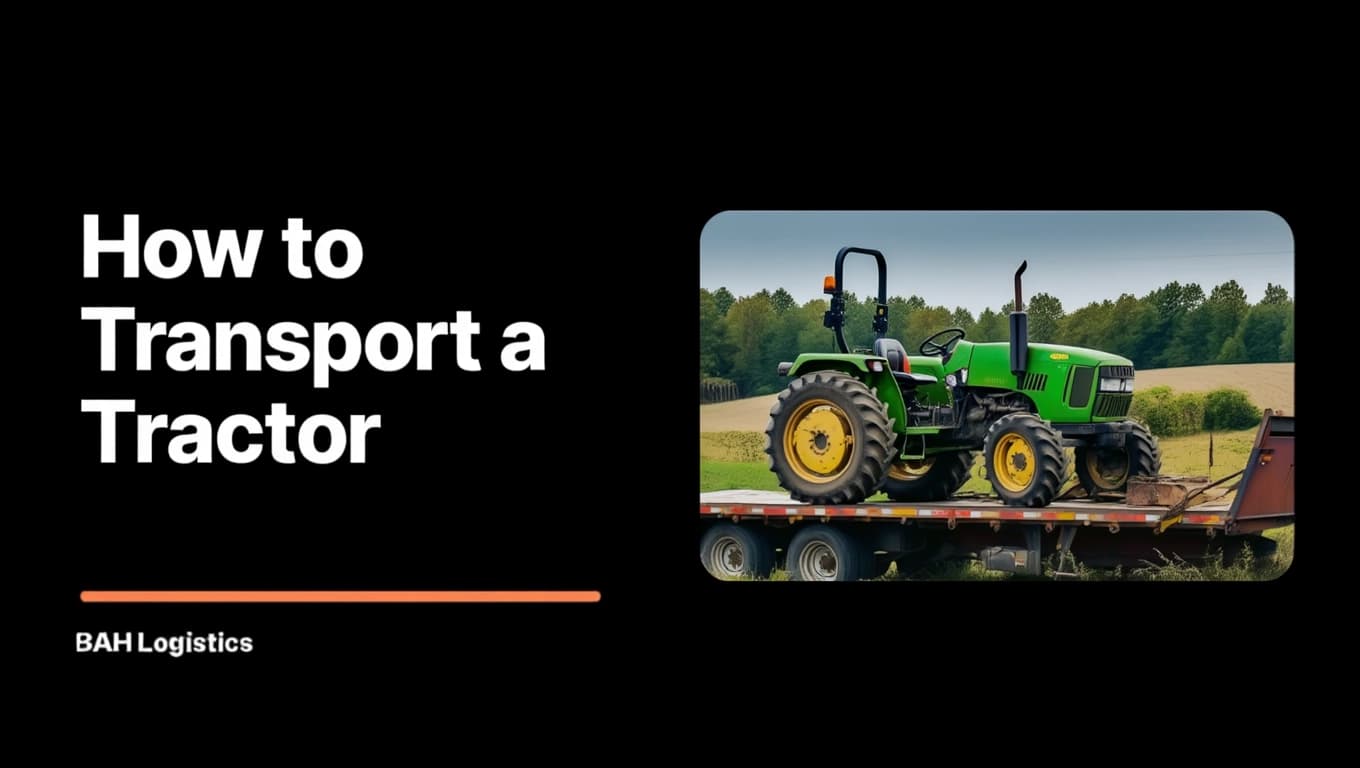

Moving a tractor isn’t like shipping a standard car; agricultural equipment is heavier, wider, and often requires specialized trailers, permits, and careful handling. With the U.S. agricultural tractor market currently valued at around $10.22 billion, the demand for safe and reliable tractor transport continues to grow across farms, dealerships, and auctions nationwide. Read on in this guide to discover the key steps involved in transporting a tractor, including preparation, shipping methods, costs, and what to expect during the process.
Trailers Used to Transport a Tractor
Not every tractor fits on every trailer. Height, weight, and how the machine gets on and off all determine which trailer you need. Here are the five main types of trailer options explained simply.
Flatbed Trailer - Most Common
A flatbed is a completely open, level deck with no walls, roof, or sides. The deck sits at a standard height above the road on a set of axles and wheels at the rear. It’s the most common and widely available trailer on the road, making it the first choice for loads that fit within legal height limits. Most standard utility or open-cab tractors load onto a flatbed using ramps or a loading dock.
Step-Deck - Drop-Deck Trailer
A step-deck looks similar to a flatbed, but the deck drops about 18–24 inches partway along its length, creating a lower rear section. That dropped section lowers the tractor’s overall transport height, helping taller cabs, exhaust stacks, or ROPS frames clear highway overpasses and bridge restrictions. It’s the natural upgrade when a flatbed works for weight but not for height.
Lowboy Trailer - Heavy & Oversized Loads
A lowboy trailer features an extremely low deck that often sits just 18–24 inches above the pavement. The front curves upward into a fixed gooseneck connection, while large wheel assemblies sit at the rear. This ultra-low profile provides much more clearance for tall tractors and is commonly used for extra-heavy or oversized agricultural equipment that would exceed the limits of a standard step-deck trailer.
Removable Gooseneck (RGN) Trailer
An RGN trailer is similar to a lowboy but with one major difference: the front gooseneck detaches completely from the trailer bed. Once lowered, the front of the trailer rests flat on the ground, creating a built-in ramp that allows tractors to drive directly onto the deck. This makes RGNs ideal for large self-propelled tractors or equipment that would be difficult or unsafe to load using ramps or cranes.
Double-Drop - Extreme Oversized Loads
A double-drop, also called a well trailer, has two deck drops instead of one, creating a very low center section known as the “well.” The front and rear sections sit at normal height, while the center section rides much closer to the pavement. This setup is reserved for the largest combines, articulated tractors, or oversized construction equipment when even a lowboy cannot provide enough clearance. It’s a specialized solution rather than a standard farm tractor transport option.
How to Prepare Your Tractor for Shipping?
Proper preparation helps prevent delays, reduces the risk of damage, and makes loading easier for the carrier. Before pickup day, go through the following checklist:
Clean the tractor. Remove mud, dirt, and debris so the tractor can be properly inspected and comply with possible soil transport regulations.
Reduce fuel and check fluids. Lower the fuel level to about a quarter tank and check for any hydraulic or fluid leaks before transport.
Fold mirrors and remove attachments. Fold in mirrors, lower raised components, and detach implements or headers when possible to reduce overall dimensions.
Secure loose parts and accessories. Remove or secure chains, tools, GPS units, lights, and other loose items that could shift during transit.
Measure the tractor. Confirm the tractor’s height, width, length, and weight so the carrier can select the correct trailer and permits if needed.
Document existing damage. Take clear photos from multiple angles before handoff to record the tractor’s condition.
Disable the alarm and remove the key. Turn off alarm systems and remove the key unless the driver needs it for loading and unloading.
Check tire pressure. Ensure the tires are properly inflated and in good condition for safe loading and transport.
Confirm pickup and delivery access. Make sure large transport trucks can safely access both locations without issues from narrow roads, gates, or soft ground.
Challenges of Shipping a Tractor
Shipping a tractor sounds straightforward, but it often comes with complications that increase costs, delays, or logistical challenges. Here are the most common issues to plan for before your equipment leaves the farm.
Size and Weight. Many tractors qualify as oversized loads once they’re on the road. That can trigger permit requirements, route restrictions, and additional transportation costs.
Finding the Right Shipping Company. Not every company transports agricultural equipment. You need a company like BAH Logistics with the proper trailer type, securement equipment, and experience handling tractors safely.
Permit Complexity. Oversized permits are issued separately by each state, and regulations can change across state lines. Missing paperwork or approval delays can slow down the entire shipment.
Loading and Unloading. Safe loading requires proper ramps, stable ground, and enough clearance space at both pickup and delivery locations. Poor loading conditions are one of the most common causes of transport damage.
Weather and Road Conditions. Heavy equipment shipments are more sensitive to weather than standard freight. Snow, heavy rain, high winds, or road closures can delay delivery or force route changes.
Seasonal Demand. Planting and harvest seasons create high demand for equipment transport services. During peak periods, prices often rise, and carrier availability becomes more limited.
The “Inoperable” Challenge. Non-running tractors are much harder to ship than operable ones. They often need winches, cranes, or rollback trucks just to load, and many companies will refuse the job if the equipment doesn’t run.
Insurance Coverage Gaps. Carrier insurance often has a limit (commonly around $100,000), which may not fully cover high-value tractors. Check coverage limits before booking. If needed, add extra insurance for full protection.
Loading Safety Risks. Tractors can be risky to load if attachments are raised, the ground is uneven, or visibility is limited. Lower all attachments, clear the area, and make sure the ground is stable before loading begins.
Benefits of Hiring a Shipping Company
Here’s what you actually gain when you work with a professional heavy equipment shipping company like BAH Logistics.
They Handle Permits and Paperwork for You
Oversize permits vary by state, route, and load dimensions, and managing them can be time-consuming and complex. A professional heavy equipment shipping company handles the full permitting process, so you don’t have to deal with state DOT requirements or risk delays due to missing approvals.
Proper Equipment Already in Place
The right trailer for a large tractor, such as a lowboy, RGN, or step-deck, is not something you can easily source yourself. A professional carrier arrives with the correct trailer and securement equipment already matched to your load.
Fully Insured Transport
Professional heavy equipment shipping companies like BAH Logistics carry cargo insurance that covers your equipment throughout the entire journey. In many cases, standard cargo coverage can reach up to $250,000, depending on the type of equipment and carrier policy. For higher-value shipments, additional insurance options are often available, with coverage limits that can increase up to $1 million when needed.
Experienced Drivers Who Know Heavy Equipment
Moving tractors requires skill in loading, securing, and transporting. Experienced drivers reduce the risk of damage and ensure proper tie-down procedures from pickup to delivery.
Saves Time So You Can Focus on Your Farm
Coordinating heavy equipment transport takes time and planning. Working with a single provider simplifies the process so you can focus on your operations instead of logistics.
Door-to-Door or Terminal-to-Terminal Options
Different situations require different solutions. Professional shippers can pick up and deliver directly or use terminal options depending on your location, timeline, and budget.
10 Risks of Driving Your Tractor on Public Roads
1. Tractors Are Slow and Dangerous on Highways
Most tractors top out at 20–25 mph, while highway traffic often moves at 65 mph or more. That speed difference creates a serious rear-end collision risk, especially on roads without wide shoulders or warning signs. Many drivers do not notice a slow-moving tractor until they are dangerously close.
2. Legal Restrictions Vary by State
Some states allow tractors on most public roads, while others restrict them from highways entirely or limit travel to certain hours. What is legal in one county may be prohibited just a few miles away.
3. SMV Signs and Lighting Are Required
A Slow Moving Vehicle (SMV) triangle must be mounted and clearly visible from the rear when operating on public roads. It is legally required in every state. Flashing amber lights and reflectors are also mandatory in many jurisdictions, particularly at night or in low-visibility conditions.
4. Tire Blowouts on Long Drives
Agricultural tires are designed for fieldwork, not extended pavement travel. Hard road surfaces generate more heat and accelerate wear in ways drivers may not notice until a blowout occurs mid-route. A tire failure at road speed can quickly lead to loss of control and a difficult recovery in traffic.
5. Wear and Tear on the Tractor
Long road trips put stress on parts like the transmission, axles, steering, and tires. In some cases, repair costs after a long drive can exceed the price of professional transport.
6. Permits May Still Be Required
Large tractors may still need permits if they exceed legal width, height, or weight limits. Driving without a permit can lead to fines, forced stops, or liability for roadway damage.
7. Insurance and Liability Gaps
Farm equipment insurance often covers tractors during agricultural use, but not necessarily while traveling on public roads. If an accident occurs during transport between properties, coverage may not apply the way owners expect. It is important to verify coverage with your insurer before the trip.
8. Infrastructure Damage
Heavy tractors, especially those with steel tracks or aggressive lugged tires, can damage asphalt, road shoulders, and soft road edges, particularly after rainfall. In some areas, the driver may be responsible for repair costs.
9. Driver Fatigue
Tractor cabs are not designed for highway comfort. Vibration, noise, and limited comfort can quickly tire the driver and increase safety risks.
10. Limited Visibility and Blind Spots
Large tractors often have wide blind spots and limited rear visibility, especially when towing equipment. On busy roads, this makes lane changes, turns, and intersections far more dangerous than many drivers expect.
How Much Does Tractor Transport Cost?
| Tractor Size | Typical Weight | Distance | Estimated Cost | Per-Mile Rate | Delivery Time (Avg) |
|---|---|---|---|---|---|
| Compact Tractor | 1,500–4,000 lbs | Under 100 miles | $300–$900 | $3–$9 / mile | 1 day |
| Utility Tractor | 4,000–10,000 lbs | Around 500 miles | $900–$1,600 | $1.8–$3.2 / mile | 1–2 days |
| Row Crop Tractor | 10,000–20,000 lbs | 1,000+ miles | $1,600–$3,500 | $1.6–$3.5 / mile | 2–6 days |
| Large Agricultural Tractor | 20,000+ lbs | Cross-country oversized haul | $3,500–$10,000+ | Varies by permits & trailer | 7–10+ days |
Regulations & Permits for Tractor Shipping
Oversize Load Permits. Required if the tractor exceeds 8.5 ft wide, 13.5 ft tall, or 80,000 lbs. Without these permits, the shipment cannot legally move on public roads.
Pilot/Escort Cars. May be required for very wide or tall loads to alert other drivers. Requirements vary by state and load size.
State-by-State Rules. Each state sets its own width, height, and weight limits. What's legal in one state may require extra permits in another.
Travel Time Restrictions. Some states only allow oversize loads to move during daylight hours. Weekend and holiday blackouts may also apply when traffic is heavier.
Seasonal Weight Restrictions. Many northern states enforce spring road bans to protect roads from freeze-thaw damage. These bans can delay shipments by days or even weeks.
Route Surveys. Extremely tall or wide loads may require a physical route check before the move. This ensures bridges, overpasses, and tight turns can safely accommodate the load.
Multi-Jurisdiction Permits. State permits don't always cover local roads, so county and city permits may also be needed. A good shipping company like BAH Logistics pulls all permits for you.
Holiday & Weekend Travel Blackouts. Oversized loads are often restricted from traveling during peak traffic periods like holidays and weekends. Planning around these windows helps avoid costly delays.
Federal DOT Inspections. The transport truck and trailer must pass strict federal safety checks before and during the move. Non-compliant equipment can be placed out of service on the spot.
A good heavy equipment shipping company manages all of these permits and requirements on your behalf. Companies like BAH Logistics handle the entire process end-to-end, ensuring compliance and smooth transport from pickup to delivery.
Conclusion
Transporting a tractor requires proper planning, the right equipment, and a clear understanding of permits, routes, and regulations. Even short moves need preparation, while larger or long-distance shipments involve added complexity. As a BBB A+ rated specialist in vehicle and machinery shipping, BAH Logistics brings the experience, equipment, and expertise that comes from years of handling this type of freight. So if your tractor needs to move, don’t leave it to chance. Get a free transport quote from BAH Logistics today, share your tractor details and destination, and let us handle everything from permits to delivery.




