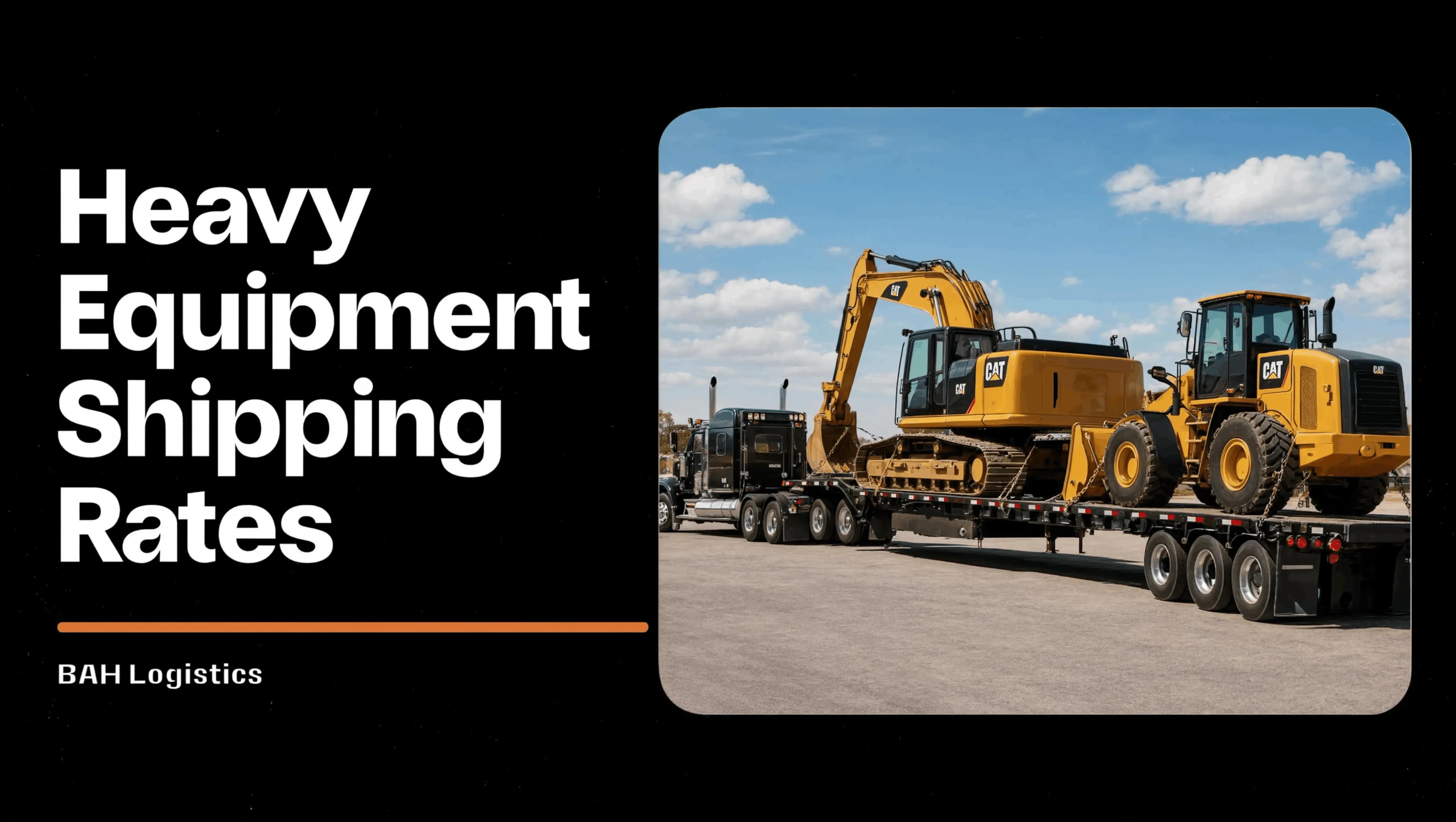

Heavy equipment shipping typically costs between $1000 and $50,000, depending on the size of the equipment, shipping distance, transport method, and permit requirements. That range is based on thousands of heavy equipment shipments BAH Logistics completed across the United States, giving us firsthand insight into 2026 market rates and pricing trends. In this guide, we'll explain what drives shipping costs, break down average rates, and show you how to estimate the cost of your shipment with confidence.
Average Heavy Equipment Shipping Rates in 2026
Heavy equipment shipping rates generally range from $2.50 to $4.00 per mile for standard transport and $3.75 to $7.50 per mile for oversize loads.
Short/Local Hauls (Under 250 miles): $4.00 to $6.00 per mile
Regional Hauls (250 to 1,000 miles): $2.50 to $4.00 per mile
Long Distance Hauls (1,000+ miles): $2.75 to $4.00 per mile
Oversize/RGN Hauls: $3.75 to $7.50 per mile
Shorter routes typically have a higher cost per mile because fixed expenses such as loading labor, trailer positioning, permits, and administrative costs are spread across fewer miles. But mileage is only one part of the equation. Many other factors influence the final shipping cost. Keep reading to learn about the key factors that affect heavy equipment shipping rates and determine where your shipment falls within these pricing ranges.
What Determines Your Heavy Equipment Shipping Rate?
Equipment Weight and Dimensions
Weight and size set your base shipping cost because states have legal limits on how much weight a truck can carry. On U.S. interstates, a standard semi-truck setup is legally restricted to a maximum gross weight of 80,000 pounds, with individual thresholds of 20,000 pounds on a single axle and 34,000 pounds on a tandem axle group. If your equipment pushes the truck over these limits, the carrier will need a specialized trailer with extra axles to distribute the weight. More axles mean a larger, less common, and more expensive trailer. Height and width also matter. If the equipment is too tall, a lower trailer may be needed to stay within legal height limits, increasing the cost before mileage is even considered.
Trailer Type Required
The type of trailer needed depends on your equipment, and each trailer has a different cost. Flatbeds are usually the least expensive because they are common and simple. Step-decks cost a little more because their lower rear deck can carry taller equipment. Lowboys and Removable Gooseneck (RGN) trailers are the most expensive because they are designed for extremely heavy equipment. An RGN trailer detaches at the front, allowing large machines to be driven directly onto the trailer, which requires specialized equipment and additional labor.
Distance and Route
Distance determines fuel and driver costs, but the route also affects the final price. For example, transporting heavy equipment a few cities away will usually cost much less than shipping it across state lines. Shorter trips require less fuel, fewer driver hours, and are often completed more quickly. Remote or rural locations can also increase costs because heavy-haul trucks have a harder time navigating narrow roads, low bridges, or rough terrain. These locations may require specialized equipment, additional coordination, or even cranes for loading and unloading.
Permits and Escorts
Permits and escort vehicles are legally required when equipment exceeds state size or weight limits. In many states, loads wider than 8.5 feet, heavier than 80,000 pounds, or taller than 13.5–14 feet are considered oversized and require special permits. Escort vehicles (pilot cars) are typically required when a load exceeds 10–12 feet in width or about 14.5 feet in height, depending on the state's regulations. Extremely large loads may require two pilot cars or even a police escort, which can significantly increase shipping costs.
Seasonal Demand
Shipping rates change throughout the year based on demand. Spring is when prices start to rise as construction projects begin and farmers move equipment for planting season, making trailers harder to find. Summer is usually the busiest and most expensive time of the year because construction is in full swing and road conditions are generally favorable. In fall, harvest season overlaps with the final push for construction projects before winter, which can keep shipping rates high in many areas. Winter often brings lower demand and more affordable rates, but snow, ice, road closures, and weather delays can still increase costs on some routes.
Fuel Prices
Fuel is one of the largest shipping expenses. Heavy haul trucks typically get only 4 to 5 miles per gallon because they carry extremely heavy loads. Even small increases in diesel prices can noticeably increase shipping costs. This factor has become even more critical due to the 2026 diesel price surge across the United States.
Loading and Unloading Requirements
If your equipment is operable, it can usually be driven onto the trailer, making loading faster and less expensive. If it is inoperable, the carrier may need a winch, crane, or other specialized equipment to load it, which increases labor and equipment costs. As a result, shipping inoperable heavy equipment typically costs an additional $600 to $3,000 or more, depending on the equipment and the loading requirements.
Cargo Insurance and Asset Value
Standard carrier insurance usually covers between $100,000 and $250,000. If your equipment is worth significantly more, additional cargo insurance may be required to fully protect it during transport, increasing the overall shipping cost. For high-value machinery, many owners choose All-Risk Primary Cargo Insurance. Unlike standard carrier coverage, an All-Risk policy is based on the equipment's full value rather than its weight.
Accessorial Fees
Some shipments require additional services that can increase the total cost. Tarping may be needed to protect equipment from weather, dirt, and road debris. If loading or unloading takes longer than expected, detention fees may apply to cover the driver's waiting time. Layover fees can also be added if delays require the driver to stay overnight before completing the delivery. Additionally, a TONU (Truck Order Not Used) fee may apply if a specialized truck or driver has already been dispatched but the shipment is canceled, helping carriers recover the costs of lost time and preparation.
Heavy Equipment Shipping Rates by Equipment Type
| Equipment Category | Physical Thresholds | Required Trailer | Primary Cost Factors |
|---|---|---|---|
| Compact Equipment | Smaller equipment that stays within standard size and weight limits | Flatbed or hotshot | Lowest-cost option with standard transport and fewer restrictions |
| Mid-Size Construction Equipment | Equipment that may stay under legal limits but requires specialized loading or trailer setup | Step-deck or lowboy | Higher handling requirements and careful weight distribution |
| Oversize Equipment | Over 8.5 ft wide, over 80,000 lbs gross weight, or above legal height limits | Lowboy or RGN | Higher rates, permits, possible escorts, and route planning |
Before requesting a quote, measure your equipment’s exact height, width, and total weight, including buckets, booms, and other attachments. Knowing your equipment category helps ensure the correct trailer is assigned, prevents unexpected charges, and keeps your shipment moving efficiently.
How We Researched These Numbers
To estimate the average cost to ship heavy equipment, we looked at real quotes provided by BAH Logistics in 2026. Here's a sample of that data.
| Origin & Destination | Distance | Avg Flatbed/Step-Deck | Oversize / RGN Avg + Permits |
|---|---|---|---|
| Houston, TX to Los Angeles, CA | 1,550 miles | $4,800 | $6,400 |
| Chicago, IL to Miami, FL | 1,380 miles | $4,100 | $5,400 |
| Denver, CO to Dallas, TX | 780 miles | $2,000 | $3,100 |
| Phoenix, AZ to Las Vegas, NV | 300 miles | $1,200 | $1,800 |
| Atlanta, GA to Charlotte, NC | 245 miles | $1,150 | $1,700 |
These figures reflect BAH Logistics' experience transporting heavy equipment across the U.S. in 2026. Since every shipment has different requirements, including equipment size, weight, route, trailer type, and permit needs, there is no single price that applies to every load, which is why we provide estimated ranges instead of one fixed rate.
How to Get an Accurate Heavy Equipment Shipping Quote?
The best way to get an accurate quote from BAH Logistics is to have the right information ready before you contact us. Here are the details we'll need:
Exact weight and dimensions. Measure your equipment’s exact height, width, length, and weight before requesting a quote. Use the manufacturer’s specifications whenever possible, but confirm the actual measurements if attachments or modifications have been added. Even a small difference in size or weight can change the trailer required or determine whether permits are needed, which can affect the final price.
Removable attachments. Let us know about any removable parts, such as buckets, blades, booms, or other attachments. Removing these items before transport may reduce the equipment's size and help avoid additional requirements. We also need to know if attachments will ship separately or stay on the machine.
Pickup and delivery locations. Always provide the full pickup and delivery ZIP codes or exact street addresses when requesting a quote. Share any details about the locations, including access issues such as narrow gates, low power lines, unpaved roads, weak bridges, or limited loading areas. These factors help us determine the right trailer, equipment, and route.
Whether the equipment runs or needs special loading. If the equipment can drive onto the trailer, loading is usually faster and more affordable. Non-operational equipment may require a winch, crane, forklift, or other specialized loading equipment. Machines with seized wheels, axles, or tracks, or those missing critical components that prevent them from rolling or steering, require a crane, boom truck, or heavy-duty forklift for safe loading and unloading.
Equipment value. Provide the value of your machinery so we can determine whether additional cargo insurance is needed. Most standard heavy-haul carriers only carry a baseline cargo insurance policy, so higher-value equipment may require additional coverage for full protection during transport.
Pickup timeline. Let us know whether your pickup date is flexible or fixed. Flexible dates may provide more shipping options and help reduce costs, while urgent shipments may have fewer available trucks. For oversize or overweight loads, state permits are typically valid for only 3 to 10 days. If the pickup is delayed beyond the permit's validity period, new permits must be purchased, which can result in additional shipping costs.
One of the most common reasons quotes change after booking is incorrect equipment information. A difference in weight or dimensions, even by a few inches or a few hundred pounds, can change the required trailer, permits, or overall shipping cost. Providing accurate details from the start helps us give you the most accurate number and ensures a smoother transport process from pickup to delivery.
Get Your Custom Quote from BAH Logistics
The rates and ranges in this guide are useful for planning, but your actual cost depends on the specific details of your shipment. As an FMCSA- and BBB-accredited company, BAH Logistics has moved thousands of shipments and knows the permits and routes inside out. Our vetted carriers are fully insured to ship any type of heavy equipment. Get a free quote today, or contact us to learn more about your options and receive a customized estimate based on your exact shipping needs.
Frequently Asked Questions
How long does it take to ship heavy equipment to another state?
Shipping time for heavy equipment to another state typically ranges from 1 to 15 days, depending on distance, route, and permit requirements. BAH Logistics can provide a more precise timeline once your equipment's size, weight, and exact route are confirmed. Factors like escort requirements and weather can also extend the delivery window on longer or oversized hauls.
What is the cheapest way to ship heavy equipment?
The cheapest way to ship heavy equipment is typically standard flatbed or step-deck transport, since it doesn't require special permits, pilot cars, or oversize fees. Choosing off-peak shipping times and staying flexible on pickup dates also helps carriers offer lower rates. Consolidating multiple pieces of equipment onto one truck, when possible, can further reduce the per-mile cost.
Is door-to-door delivery available for heavy equipment shipping?
Yes, door-to-door delivery is commonly available for heavy equipment shipping when the pickup and delivery sites can safely accommodate a large truck and trailer. If access is limited due to tight roads, low clearance, or soft ground, a nearby accessible meeting point may be used instead.
Can attachments and accessories stay on my equipment during transport?
Attachments and accessories can often stay with the equipment during shipping, but only if they don't exceed the trailer's legal height, width, or weight limits. Loose items placed on top or extending outward may affect load clearance or trigger oversize permit requirements. Keep in mind that carrier insurance typically covers the equipment itself, not detachable tools, accessories, or personal items left with it, so valuables should be removed or shipped separately.




